After a tree comes down in Statesville, the stump is the part everyone wants to forget. It is also the part that decides what you can do with that spot next. Grinding and full removal sound similar and leave very different ground behind. Grinding chews the stump and major surface roots into chips below grade. Removal pulls or digs out the whole stump and root ball, leaving a hole to fill. Choosing between them is really choosing what happens on that spot over the next few years.
Think past the day of the work. Will you replant a tree there, extend a driveway, build a bed, or simply mow over it? Each answer favors a different method, and the wrong choice shows up later as a sunken patch, a lawn full of chips, or roots resprouting at the edges.
| Question | Stump grinding | Full stump removal |
|---|---|---|
| What is taken out | Stump ground to below soil level, commonly six to twelve inches down, plus surface roots as agreed | Stump and root ball extracted, leaving a larger open hole |
| What is left behind | A mix of wood chips and soil that settles as chips decay | Open ground to backfill with soil, little wood left |
| Settling afterward | Expect some settling over months as chips break down | Settling depends on how well backfill is compacted |
| Replanting a tree on the spot | Poor choice, old roots and chips remain below | Best choice, the planting zone is cleared |
| Building or paving over it | Not suitable where a firm base is needed | Preferred, with proper backfill and compaction |
| Disruption to the yard | Smaller footprint, machine access still needed | Larger excavation, more soil to bring in |
Chips, settling, and the sunken circle
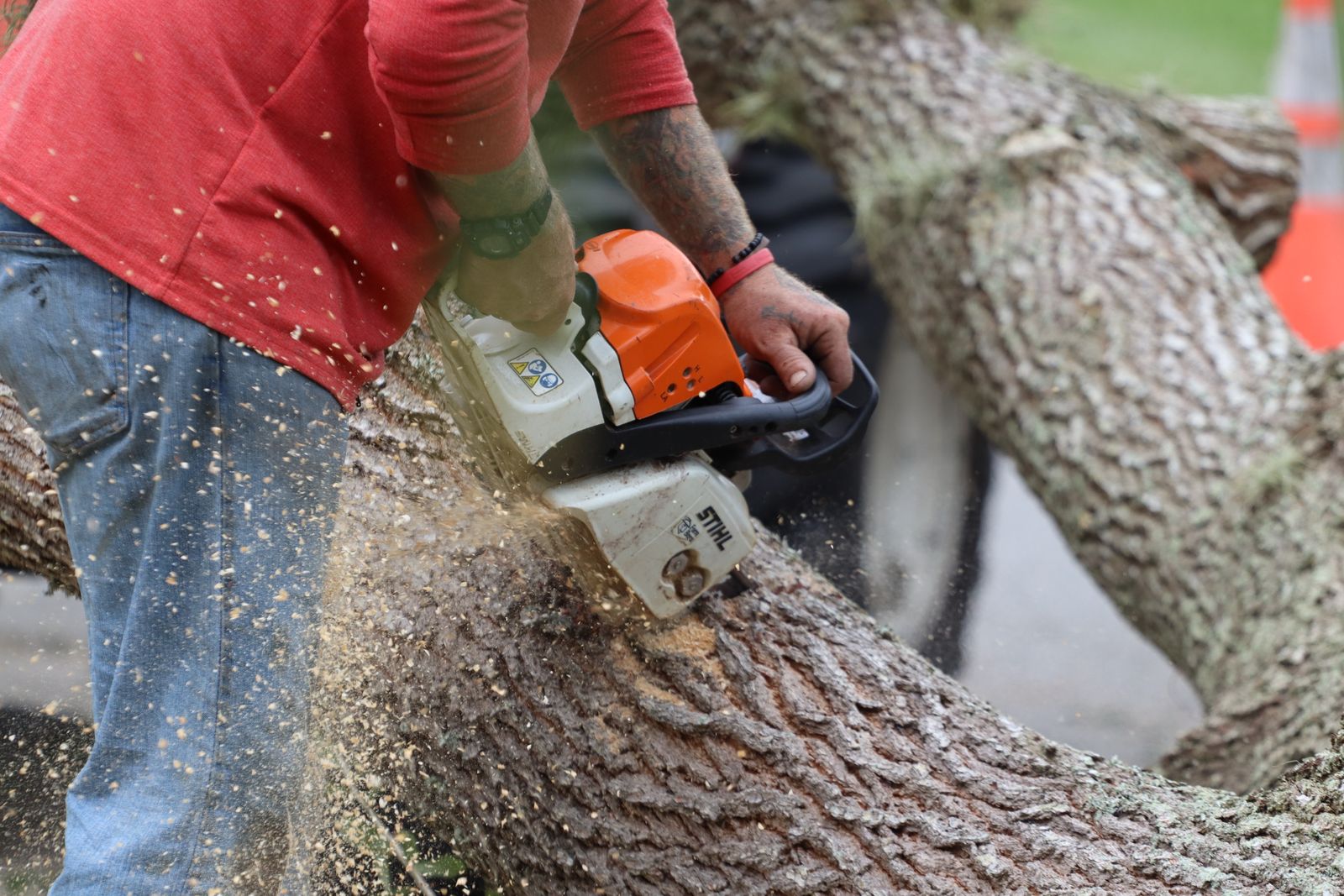
Ground chips are useful as mulch elsewhere in the yard, but left in the hole they decay and the surface sinks, often leaving a shallow bowl that collects water and shows in the lawn. Raking out excess chips and topping with soil reduces the dip, but some settling is normal and a spring top up of soil is common. Grass seed over a ground stump area often struggles the first season because decaying wood ties up nitrogen near the surface. A light feeding and patience fix most cases. If mushrooms appear in the circle later, they are feeding on buried roots, which is normal decay and not a sign the work failed.
Replanting and resprouting realities
Some species resprout from roots left behind, sending up shoots around the old stump. Grinding the stump deeper and chasing main roots reduces this, but vigorous species can still push sprouts for a season. For replanting, arborists generally advise planting a new tree offset from the old spot even after grinding, because the soil there is full of old roots and chips. Full removal clears that conflict and also makes room to correct drainage or run utilities. Crews such as Mecho Tree Service will usually ask what the spot is for before recommending a method, and that question is the whole decision in one line.
Making the decision by situation
Choose grinding when the area will stay lawn or beds, when access is tight, and when you accept topping up soil as chips settle. Choose removal when construction, paving, or a new tree is planned for the exact spot, or when the stump is already pushing up surrounding hardscape. Consider size and species too: a small ornamental stump is a quick grind, while a large oak stump holds far more wood below ground. Whatever you choose, agree in advance on depth, whether surface roots are included, and who hauls or keeps the chips, because those details, not the headline method, decide how the yard looks afterward.
Access and timing practicalities
Grinding machines need a gate or access path wide enough to reach the stump, and full removal needs room for excavation and soil delivery. Both go faster in dry weather, when equipment does less damage to lawns crossing the yard. If several trees came down at once, handling all stumps in one visit is more efficient than returning for each one, and the chips from grinding can be spread in beds the same day. Ask about utility marking before any digging or deep grinding, because shallow lines for irrigation, lighting, and invisible fences are common in Statesville yards and easy to strike.
Common questions
How deep does stump grinding go?
Common grinding depth is around six to twelve inches below grade, deeper if requested for planting or construction. Agree on the depth before work starts, because deeper grinding takes more time.
Will grass grow over a ground stump?
Yes, after excess chips are raked out, soil is added, and the area is seeded. Expect some settling and thinner grass the first season as buried wood decays below.
Can I plant a new tree where the old one stood?
It is better to offset the new tree from the old stump area, or choose full removal if the exact spot matters. Old roots and chips make establishment harder for a young tree.
Photos in this guide are representative stock images.
← All guides from Mecho Tree Service← Back to Mecho Tree Service